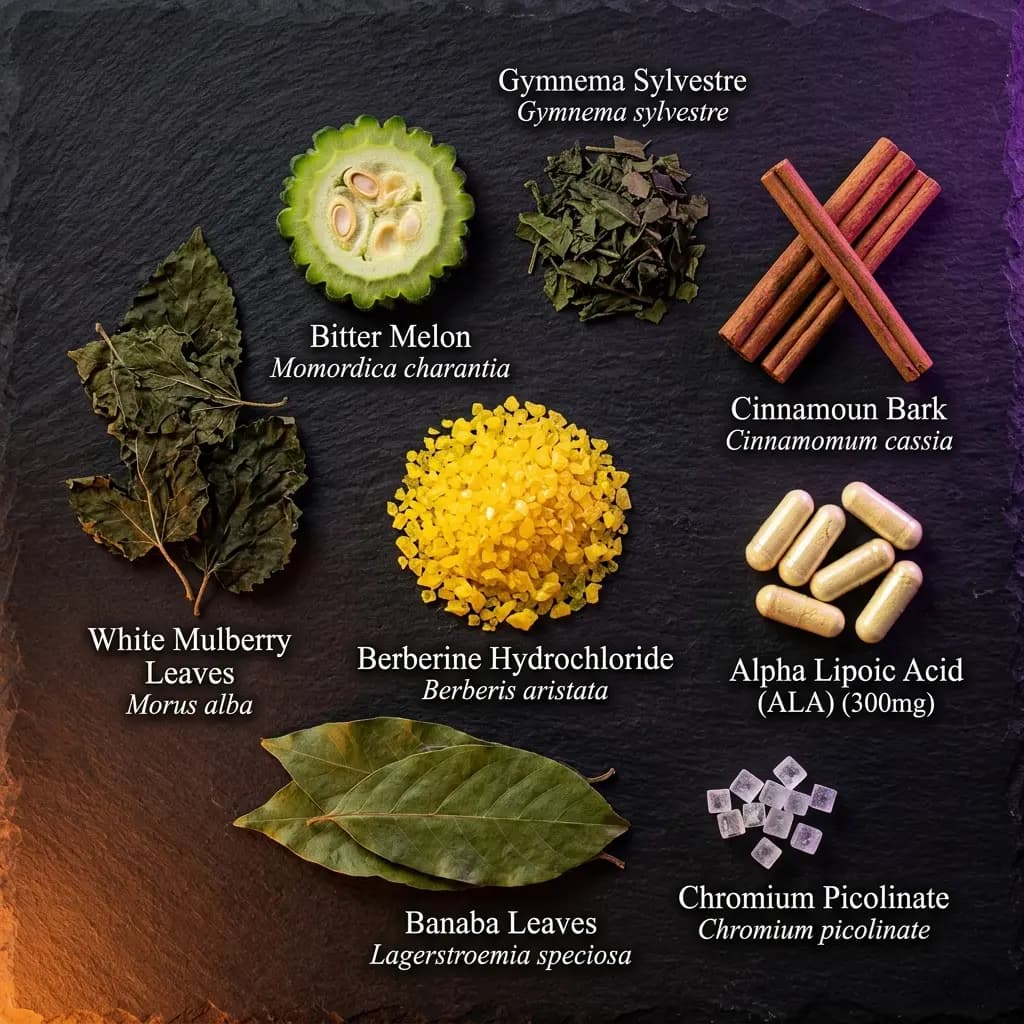
Meilleurs Compléments Glycémie Perte de Poids 2026 : Berbérine, Gymnema & Soutien Naturel du Glucose Comparés
De la Berbérine au Gymnema Sylvestre à la feuille de Banaba — quels compléments glycémiques fonctionnent vraiment pour la perte de poids ?
Blood Sugar Supplements for Weight Loss: Why This Category Matters More Than Most Dieters Know
The blood sugar supplement category sits at the intersection of metabolic medicine and weight management — and it's one of the most evidence-rich niches in all of natural health. Unlike many supplement categories where clinical evidence is sparse or preliminary, the glucose-regulating botanical compounds reviewed here have decades of rigorous clinical trial data from both diabetology and obesity medicine departments at major research institutions.
This comparison evaluates the key ingredients in blood sugar supplements specifically through the lens of weight management — focusing on which compounds address the insulin resistance → fat storage cycle most effectively.
Tier 1: Strongest Evidence for Both Blood Sugar AND Weight Management
Berberine — The Natural Metformin
Evidence: Class A — 14 RCT meta-analysis; head-to-head trial with metformin showing equivalent outcomes.
Blood sugar mechanism: AMPK activation → increased hepatic glucose uptake, decreased hepatic glucose output, increased GLUT4 expression in muscle → improved insulin sensitivity at multiple sites simultaneously. Also reshapes gut microbiome toward metabolically favorable species (Akkermansia muciniphila).
Weight management mechanism: Improved insulin sensitivity → reduced chronic hyperinsulinemia → restored fat cell lipolysis access. Additionally reduces lipogenesis in hepatocytes (reduces liver fat associated with insulin resistance). A 2012 meta-analysis confirmed statistically significant weight reduction vs. placebo across 14 trials.
Clinical dose: 500mg 3x/day (total 1,500mg) — the dose used in the head-to-head metformin trial. Lower doses show effects but less consistently.
Critical consideration: Berberine has true drug-grade effects — it must be used carefully with diabetes medications, blood thinners, and certain antibiotics (it inhibits CYP enzymes). This clinical significance is evidence of real potency.
Gymnema Sylvestre — Multi-Mechanism Sugar Regulator
Evidence: Class A for sugar absorption and craving reduction; Class B for beta cell support.
Mechanism for weight management:
- Blocks intestinal glucose absorption → lower postprandial glucose spikes → lower insulin response → reduced lipogenic signaling
- Blocks taste sweet receptors → reduces hedonic drive for sugary foods → decreased caloric intake from high-glycemic foods
- Reduces HbA1c and fasting glucose (multiple RCTs) → improved insulin sensitivity over time
The craving-blocking mechanism is unique in this category — no other blood sugar supplement directly reduces the neurological reward from sugary foods. For individuals whose overconsumption is driven primarily by sweet food cravings, this is the most targeted intervention available naturally.
Clinical dose: 400-800mg standardized Gymnema extract (25% gymnemic acids) per day.
Tier 2: Strong Evidence for Specific Glucose-Management Mechanisms
Banaba Leaf (Corosolic Acid) — Insulin-Independent Glucose Disposal
Evidence: Class B — Multiple RCTs; mechanism well-characterized at receptor level.
Why it matters for weight loss: Standard glucose-lowering strategies work through or around insulin. Banaba's corosolic acid works via a different pathway: direct GLUT4 translocation in muscle and fat cells without requiring insulin receptor activation. For highly insulin-resistant individuals where the primary bottleneck is impaired insulin receptor function, insulin-independent glucose disposal is invaluable — it bypasses the defective upstream signaling entirely.
Additional benefit: Corosolic acid inhibits alpha-glucosidase → slowed carbohydrate digestion → blunted postprandial glucose curve → reduced insulin secretion required.
Alpha Lipoic Acid — Oxidative Stress + AMPK
Evidence: Class A — Extensive RCT base from both diabetic neuropathy research and metabolic syndrome trials.
Weight management relevance: Oxidative stress is a primary cause of insulin receptor dysfunction — the same reactive oxygen species that damage blood vessels and neural tissue also impair insulin receptor tyrosine kinase activity. ALA's unique role as both water-soluble and fat-soluble antioxidant provides comprehensive ROS protection in both the aqueous cytoplasm and lipid membranes where insulin receptors are embedded. ALA supplementation also activates AMPK → increased fat oxidation → direct metabolic support. Fat-specific mechanism: ALA reduces the size of existing fat cells by promoting fatty acid mobilization.
Cinnamon (Cinnamomum cassia) — Insulin Mimetic
Evidence: Class B-A — Meta-analysis of 10 RCTs confirming fasting glucose reduction; mechanism well-established for procyanidins acting on insulin receptors.
Practical consideration: Cinnamon is one of the most accessible blood sugar compounds and has the longest safety history of any ingredient in this category. Many individuals obtain some benefit from culinary cinnamon (Ceylon variety preferred for daily use due to lower coumarin content vs. cassia). Standardized supplement extract provides more consistent and concentrated effect.
White Mulberry Leaf (DNJ) — Natural Acarbose
Evidence: Class B — Multiple RCTs confirming postprandial glucose reduction comparable to small-dose acarbose; mechanism (DNJ as glucosidase inhibitor) biochemically characterized.
Weight management relevance: By reducing carbohydrate digestion rate and glucose absorption, white mulberry leaf effectively lowers the glycemic index of any meal consumed with it — reducing postprandial insulin secretion → reduced lipogenic signaling → less fat storage from the same carbohydrate intake. This is the same mechanism as the prescription drug acarbose, which has also been shown in clinical trials to prevent weight gain when added to a high-carbohydrate diet.
Ingredients That Don't Belong in Blood Sugar Weight Loss Formulas
- Chromium alone: While chromium picolinate has evidence for insulin sensitivity, it lacks the potency of berberine or gymnema. Products featuring chromium as the primary glucose-support ingredient are likely underpowered.
- Bitter melon without standardization: Bitter melon (Momordica charantia) has evidence in some Asian population studies but shows highly variable and inconsistent results in Western RCTs. Mechanism involves multiple active compounds that vary widely by preparation.
- Generic "blood sugar blends" with proprietary stacking: Formulas that list 15-20 ingredients without any disclosed individual doses are often underdosing everything. The most effective formulas feature fewer, higher-dose evidence-anchored ingredients.
Ignitra Formula Assessment Against Evidence Standards
| Ingredient | Evidence Tier | Primary Weight-Loss Mechanism | In Ignitra |
|---|---|---|---|
| Berberine | Tier 1 ✅ | AMPK + insulin sensitivity + fat cell lipolysis restoration | ✅ Yes |
| Gymnema Sylvestre | Tier 1 ✅ | Glucose absorption block + craving elimination | ✅ Yes |
| Banaba Leaf (Corosolic Acid) | Tier 2 ✅ | Insulin-independent GLUT4 glucose disposal | ✅ Yes |
| Alpha Lipoic Acid | Tier 2 ✅ | Oxidative stress → insulin receptor dysfunction repair | ✅ Yes |
| Cinnamon Bark | Tier 2 ✅ | Insulin mimetic procyanidins | ✅ Yes |
| White Mulberry Leaf | Tier 2 ✅ | DNJ glucosidase inhibition — natural acarbose | ✅ Yes |
| Educational bonus materials | N/A | Behavioral glucose management support | ✅ Included |
Who Gets the Most from Blood Sugar-Focused Weight Loss Supplements
Highest expected benefit: Individuals with confirmed or suspected insulin resistance, pre-diabetes, metabolic syndrome, or PCOS — where the blood sugar-fat storage connection is most pronounced. This population may see significantly greater weight loss response to blood sugar supplements than to conventional thermogenic fat burners.
Moderate benefit expected: Healthy adults with high-carbohydrate dietary patterns, chronic sweet cravings, or post-meal energy crashes — blood sugar supplementation addresses the glucose instability underlying these symptoms.
Lower priority: Lean, non-insulin-resistant adults whose dietary pattern is already low-glycemic — the glucose pathway is not a primary driver of their energy balance, limiting the benefit of glucose-specific interventions.
Conclusion
The blood sugar supplement category is one of the most evidence-rich in the natural health space. Berberine, Gymnema, Banaba, ALA, Cinnamon, and White Mulberry all have published human RCT data confirming meaningful glucose and insulin improvements — and the weight loss implications of improving these markers are mechanistically predictable and clinically confirmed.
Ignitra's formula, centered around these Tier 1-2 evidence ingredients with educational bonus materials, represents a thoughtful blood-sugar-first approach to weight management that addresses the root metabolic cause rather than relying solely on thermogenic stimulation or appetite suppression.
For anyone who has struggled with conventional weight loss approaches and suspects blood sugar may be a factor, a 90-day Ignitra protocol (3-bottle package) with concurrent implementation of the included dietary guides provides the most comprehensive evidence-based intervention available in the supplement category for this specific metabolic pattern.