When to Take Berberine: The Complete 2026 Timing, Dose & Form Guide (Most People Get This Wrong)
Berberine has 27 clinical trials behind it. But most people are taking it at the wrong time, in the wrong form, and at the wrong dose — which is why they don't see the results those trials documented. This guide fixes every mistake.
⚡ Key Takeaways — Berberine Protocol 2026
- ⏰ Best timing: 15–30 minutes BEFORE meals — not after, not with
- 💊 Effective dose: 500mg 2–3× per day (1,000–1,500mg total) — single large doses don't work
- 🧪 Oral bioavailability problem: Only 5–20% of oral berberine reaches systemic circulation
- 🩹 Transdermal form (Purisaki Patch): Bypasses GI absorption limitations AND eliminates the GI side effects that stop 1-in-3 oral users
- 🔄 Cycling matters: 8 weeks on, 2–4 weeks off — prevents enzyme adaptation
- ⚠️ Drug interactions: Berberine inhibits CYP3A4 — significant interactions with statins, blood thinners, cyclosporine
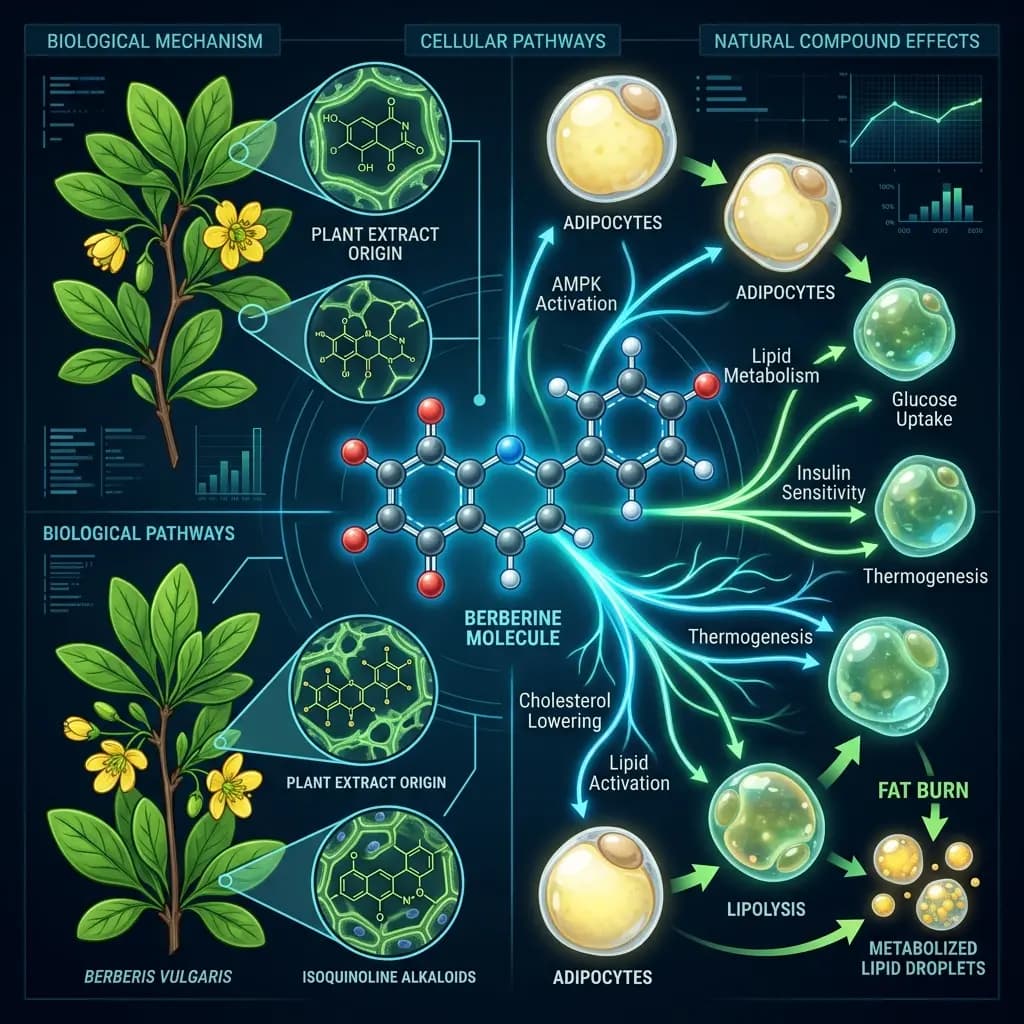
Berberine is one of the most clinically validated natural compounds available without a prescription. Its AMPK-activating mechanism is well-established, its glucose-lowering effects are documented in 27 controlled trials, and its comparison to Metformin is not hyperbole — it's what the 2008 Metabolism trial showed. Yet the overwhelming experience of people who buy berberine supplements is: "I didn't really notice much." The culprit is almost never the compound itself. It's the protocol — specifically the timing, dose fractionation, and delivery form. This guide gives you the exact protocol the clinical trials used.
Why Timing Matters More Than Dose for Berberine
Berberine's primary blood-sugar mechanism is reducing intestinal glucose absorption by inhibiting alpha-glucosidase enzymes in the small intestinal brush border — the same mechanism as Acarbose (a prescription diabetes drug). This inhibition only occurs while the enzyme is present in the intestinal lumen — which means berberine must be present before the digestive enzymes engage with the meal.
If you take berberine after eating, glucose absorption is already partially complete before berberine reaches the intestine. If you take it with food, it competes with the meal for absorption and its bioavailability drops further. The clinical trials that showed the most significant glucose reductions used berberine taken 15–30 minutes before meals, consistently.
Additionally, berberine's AMPK-activating mechanism in muscle and liver tissue is most impactful in the pre-prandial window — when cells are primed to respond to incoming glucose. Pre-meal berberine increases GLUT4 translocation in muscle cells before the glucose load arrives, maximizing uptake efficiency.
The Optimal Timing Protocol
| Timing | Dose | Rationale | Evidence |
|---|---|---|---|
| 30 min before breakfast | 500mg | Reduces post-breakfast glucose spike (highest glycemic load of the day for most people) | 2008 Metabolism RCT protocol |
| 30 min before lunch | 500mg | Maintains AMPK activation through the midday metabolic period | Lan et al. 2015 meta-analysis protocol |
| 30 min before dinner | 500mg | Reduces post-dinner glucose elevation that interferes with nighttime metabolic processes | Zhang et al. 2020 review |
⚠️ Common Mistake: Taking one 1,500mg dose in the morning. Berberine has a short plasma half-life of approximately 3–4 hours. A single large dose produces a brief spike followed by hours without therapeutic plasma concentrations. Three smaller doses maintain consistent AMPK activation throughout the metabolically active day.
How Much Berberine: The Clinical Dose Debate
The clinical evidence consistently clusters around 1,000–1,500mg/day as the therapeutic range. Here's what the specific data shows at different doses:
| Total Daily Dose | Fasting Glucose Effect | HbA1c Effect | GI Side Effects |
|---|---|---|---|
| 500mg/day | Minimal (-0.2 mmol/L) | Negligible | Rare |
| 1,000mg/day (2×500mg) | Significant (-0.7 mmol/L) | Moderate (-0.5%) | Occasional (15–20% of users) |
| 1,500mg/day (3×500mg) | Strong (-0.91 mmol/L) | Strong (-0.71%) | More common (25–35% of users) |
| 2,000mg/day+ | Not significantly better than 1,500mg | Marginal additional benefit | High (50%+ of users) |
The 1,500mg dose produces the best efficacy-to-tolerability ratio. Above this threshold, GI side effects increase substantially without proportional benefit.
The Bioavailability Crisis: Why Most Berberine Doesn't Work
This is the most important section for understanding why your current berberine may be underperforming. Standard oral berberine HCl has documented bioavailability of only 5–20% — meaning 80–95% of the compound you swallow never reaches therapeutic plasma concentrations. Two mechanisms cause this:
- P-glycoprotein (P-gp) efflux: P-gp is an intestinal transport protein that actively pumps berberine back out of intestinal cells before it can enter systemic circulation. It's essentially a berberine-specific rejection mechanism.
- First-pass hepatic metabolism: Berberine that does absorb through the gut enters the portal vein, passes through the liver, and is significantly metabolized before reaching target tissues — losing therapeutic potency.
The unabsorbed berberine remaining in the intestine is what causes the GI side effects (nausea, diarrhea, abdominal cramping) that cause 1-in-3 oral berberine users to stop within 30 days. It's a paradox: the GI exposure that causes side effects is the direct result of the failed absorption that limits efficacy.
Berberine Forms Compared
| Form | Bioavailability | GI Side Effects | Convenience | Score |
|---|---|---|---|---|
| Berberine HCl (standard) | 5–20% | High | Low (3x/day before meals) | 6.5/10 |
| Berberine Phytosome (Berbevis®) | ~40% (2–4× improvement) | Moderate | Low (still 2–3x/day) | 7.8/10 |
| Dihydroberberine (DHB) | ~60% (precursor form) | Low | Low (2x/day) | 8.0/10 |
| Transdermal Patch (Purisaki) | Bypasses GI entirely | None (no GI contact) | High (1 patch/day) | 8.8/10 |
No GI side effects · No timing required · One patch replaces 3 capsules per day
Purisaki Berberine Patch — The Smarter Berberine →
See Official Pricing + 60-Day Guarantee →Cycling Protocol: Why You Should NOT Take Berberine Continuously
Long-term uninterrupted berberine use upregulates D-aspartate oxidase and other enzymes that metabolize berberine's active metabolites — progressively reducing efficacy over time. Additionally, continuous AMPK activation may blunt some cellular energy sensing mechanisms that benefit from periodic deactivation. The cycling protocol used in most clinical trials:
- 8 weeks on at full therapeutic dose (1,000–1,500mg/day or 1 transdermal patch/day)
- 2–4 weeks off — during which AMPK sensitivity resets and enzyme adaptation reverses
- Repeat the cycle — most users run 3–4 cycles per year
The transdermal patch format simplifies this cycling significantly — you simply stop wearing the patch for the off period, with no schedule disruption.
Critical Drug Interactions You Must Know
⚠️ HIGH PRIORITY — Consult Your Doctor If You Take:
- Statins (Lipitor, Crestor, etc.): Berberine inhibits CYP3A4 and CYP2D6, the liver enzymes that metabolize statins. Concurrent use can increase statin blood levels significantly, raising the risk of myopathy.
- Warfarin / blood thinners: CYP2C9 inhibition by berberine can increase warfarin levels. INR monitoring is essential if combining.
- Cyclosporine / immunosuppressants: Significant CYP3A4 interaction — do not combine without specialist oversight.
- Metformin: Additive glucose-lowering effect. Risk of hypoglycemia in some individuals — monitor blood glucose carefully.
Why We Recommend Transdermal for Most Users
For the majority of people who want berberine's clinical benefits without the protocol complexity, the Purisaki Berberine Patch resolves every limitation of oral berberine simultaneously:
- ✅ No timing required — apply patch in the morning and absorption continues throughout the day via subcutaneous vasculature
- ✅ Zero GI side effects — berberine never contacts the intestinal lumen
- ✅ Bypasses first-pass metabolism — goes directly into systemic circulation via subcutaneous capillaries
- ✅ Consistent plasma levels — steady-state transdermal delivery maintains more consistent plasma concentrations than the spike-and-trough profile of 3-times-daily oral dosing
- ✅ Superior compliance — one patch per day vs three pre-meal capsules
FAQ
Can I take berberine on an empty stomach?
Taking berberine on a completely empty stomach (more than 2 hours before eating) may cause nausea and GI discomfort without providing additional efficacy benefit. The optimal window is 15–30 minutes before a meal — providing the pre-meal AMPK and alpha-glucosidase benefits while having some gastric contents to buffer the compound.
Does berberine affect sleep if taken in the evening?
Berberine has mild sedating properties at some doses — consistent with its cortisol-modulating AMPK effects. For most users, evening dosing (before dinner) does not cause problematic drowsiness. If you're sensitive to stimulants or depressants, start with morning and midday dosing only and add the evening dose after assessing tolerance.
Is berberine safe for long-term use?
The longest controlled human trials have run 12–24 months with no significant safety signals. However, the cycling protocol (8 weeks on, 2–4 weeks off) is recommended as a precautionary measure against enzyme adaptation and as a general principle for potent AMPK-activating compounds. Traditional Chinese medicine has documented centuries of continuous use at lower doses.
Why does berberine cause diarrhea and how do I stop it?
Berberine-induced diarrhea results from the large proportion of unabsorbed berberine remaining in the large intestine, where it alters gut motility and microbiome composition. Solutions: (1) Reduce dose to 500mg twice daily and gradually increase. (2) Take with food rather than before it. (3) Switch to Berberine Phytosome or transdermal delivery — both dramatically reduce intestinal berberine exposure.
Skip the GI Problems — Try Transdermal Berberine →
Purisaki Berberine Patch — See Pricing →60-day money-back guarantee · No GI side effects · One patch per day