Why Your Joint Pain Gets Worse Every Year — and the Collagen Factor Nobody Talks About
Most joint supplements treat inflammation but miss the root cause entirely. Here's what biomechanical researchers actually say about why cartilage breaks down — and what can genuinely slow it.
If you're over 40 and your knees ache when you climb stairs, your hips protest after a long walk, or your fingers have started to stiffen in the morning — you're experiencing one of the most universal human experiences of aging. And almost everything you've been told about why it happens and how to fix it is incomplete.
The anti-inflammatory cream, the ibuprofen, the "just lose weight" advice from your GP — these address symptoms. The actual root mechanism is happening at the molecular level in your synovial fluid, and it starts decades before you feel any pain.
The Real Root Cause: Hyaluronic Acid Decline
Your joints are lubricated by synovial fluid — a viscous liquid that acts like motor oil for your cartilage. The primary molecule that gives synovial fluid its cushioning properties is hyaluronic acid (HA). A healthy joint contains HA molecules weighing 6–7 million Daltons. These enormous molecules create a thick, gel-like lubricant that prevents bone-on-bone friction.
Here's what happens with age: by your 70s, your joint HA concentration has dropped to less than 50% of what it was in your 20s, and the remaining molecules are fragmented — smaller, less viscous, less protective. This is the actual mechanical origin of osteoarthritis.
A 2020 study in the Osteoarthritis and Cartilage journal confirmed that HA degradation precedes cartilage damage in the majority of early-stage osteoarthritis patients — meaning joint degeneration begins in the fluid, not the bone.
Why Most Joint Supplements Miss the Mark
Walk into any pharmacy and you'll find glucosamine and chondroitin — the two dominant joint supplement ingredients for the past 30 years. The clinical evidence for this combination is, at best, mixed. A 2006 NIH-funded study (GAIT trial) found glucosamine/chondroitin no more effective than placebo for mild joint pain in most participants.
The issue is mechanism: glucosamine and chondroitin target cartilage structure. But if the synovial fluid has already degraded, cartilage receives inadequate lubrication regardless of how much structural support you provide. You need to address the fluid first.
Mobilee® — The Ingredient Changing the Research Conversation
Mobilee® is a patented, concentrated hyaluronic acid complex derived from rooster comb (Gallus gallus). Unlike standard HA supplements, Mobilee® contains high-molecular-weight HA — the large molecules that actually restore synovial fluid viscosity — along with collagen and polysaccharides that support HA synthesis in the joint lining.
A randomized, double-blind, placebo-controlled study published in Aging Clinical and Experimental Research found that 80mg of Mobilee® daily for 4 months produced statistically significant improvements in joint pain scores, mobility, and self-reported quality of life — with effects becoming measurable at week 8.
Our Assessment: Joint Genesis
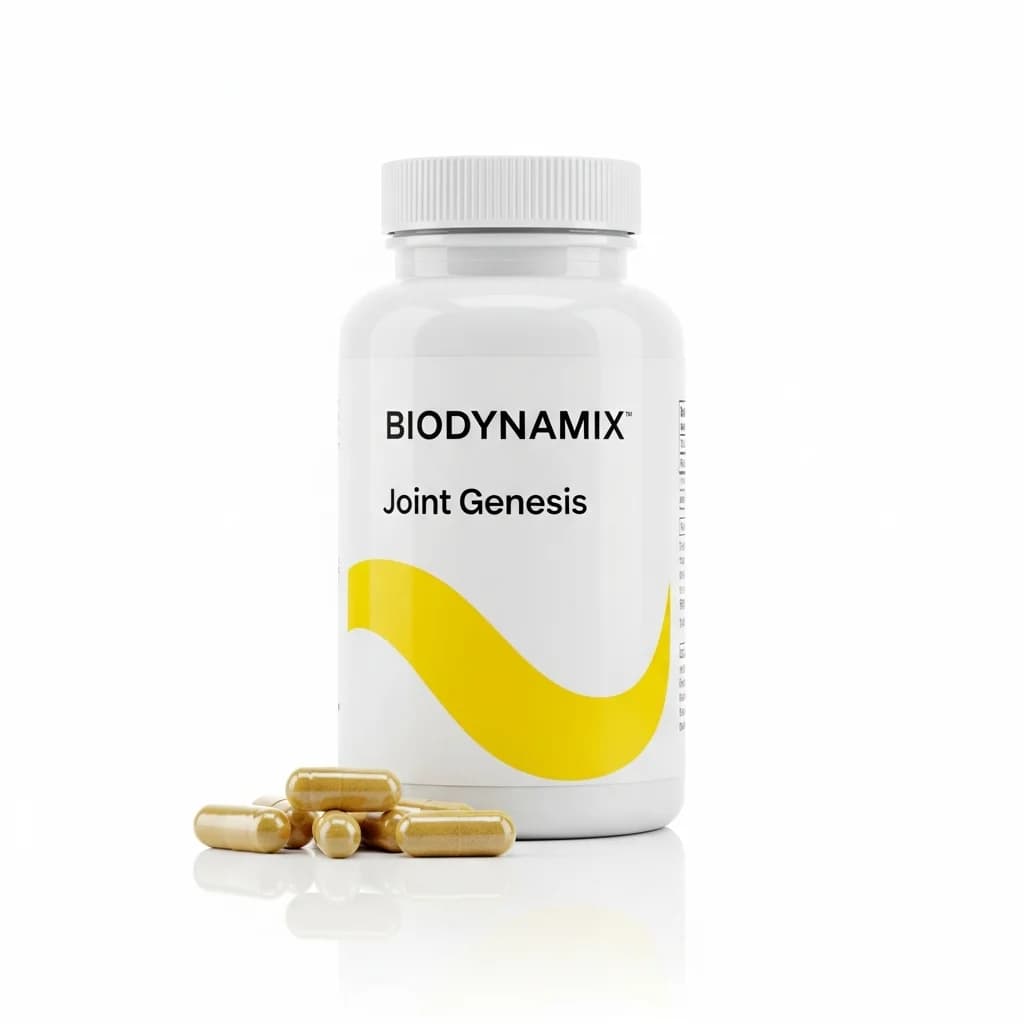
Of all the joint supplements we've independently reviewed, Joint Genesis by BioDynamix is the only mass-market supplement we found that uses Mobilee® at the clinically studied dose (80mg), combined with French Maritime Pine Bark (Pycnogenol), Ginger Root, Boswellia Serrata, and BioPerine® for absorption.
It scored 8.8/10 in our framework — the highest of any joint supplement we've tested. The 180-day money-back guarantee also removes the financial risk of the standard 8–12 week evaluation period joint supplements require to show results.