Ashwagandha vs Rhodiola (2026): Which Adaptogen Actually Fixes Cortisol — and When to Use Each
Both are adaptogens. Both reduce stress hormones. But their mechanisms, ideal users, and optimal timing are completely different. After reviewing 38 clinical trials, we built the definitive decision guide for 2026.
⚡ Key Takeaways
- 🔬 Ashwagandha reduces cortisol at the adrenal level — best for chronic stress, sleep, testosterone
- 🔬 Rhodiola improves stress resilience at the CNS level — best for acute performance, focus, fatigue
- ✅ They work via completely different mechanisms — not interchangeable
- ✅ Can be taken together safely — addressing both the adrenal and CNS pathways simultaneously
- ⚠️ Choosing the wrong adaptogen for your stress type is why most people "don't feel anything"
- 🏆 Best supplement currently containing both: SpartaMax (KSM-66® + Rhodiola)
The adaptogen category is one of the fastest-growing segments in the supplement market — and one of the most confusing. Ashwagandha and Rhodiola are the two most-purchased options, and their marketing is virtually identical: "reduce stress," "boost energy," "improve focus." This overlap has created a massive consumer confusion problem: millions of people choose one based on price or packaging and then wonder why it "didn't work." The reason it didn't work is almost always because they chose the wrong adaptogen for their specific stress physiology. This guide fixes that.
Two Types of Stress — Two Different Adaptogen Targets
The stress response operates across two distinct biological axes. Understanding which axis is driving your symptoms determines which adaptogen is appropriate:
🔴 HPA Axis Dysregulation (Ashwagandha Target)
Hypothalamus → Pituitary → Adrenal glands. Chronic stress causes the adrenal cortex to overproduce cortisol. Symptoms: elevated resting cortisol, poor sleep, anxiety, low testosterone, weight gain around the abdomen.
🔵 CNS Fatigue (Rhodiola Target)
Central nervous system neurotransmitter depletion from acute or sustained cognitive/physical effort. Symptoms: mental fatigue, brain fog, poor performance under pressure, difficulty concentrating, burnout-type exhaustion.
Ashwagandha: The Adrenal Cortisol Regulator
Ashwagandha (Withania somnifera) is an Ayurvedic root whose withanolides act directly on the HPA axis — specifically modulating the feedback sensitivity of glucocorticoid receptors in the hippocampus. When these receptors are appropriately sensitive, the brain detects cortisol levels accurately and signals the adrenals to reduce production. Chronic stress blunts this feedback sensitivity — causing cortisol to remain chronically elevated. Ashwagandha restores it.
The clinical evidence at KSM-66® standardization (5% withanolides):
- A 2012 double-blind RCT in Indian Journal of Psychological Medicine (n=64): 300mg KSM-66® twice daily reduced serum cortisol by 27.9% and significantly improved all Perceived Stress Scale scores versus placebo over 60 days.
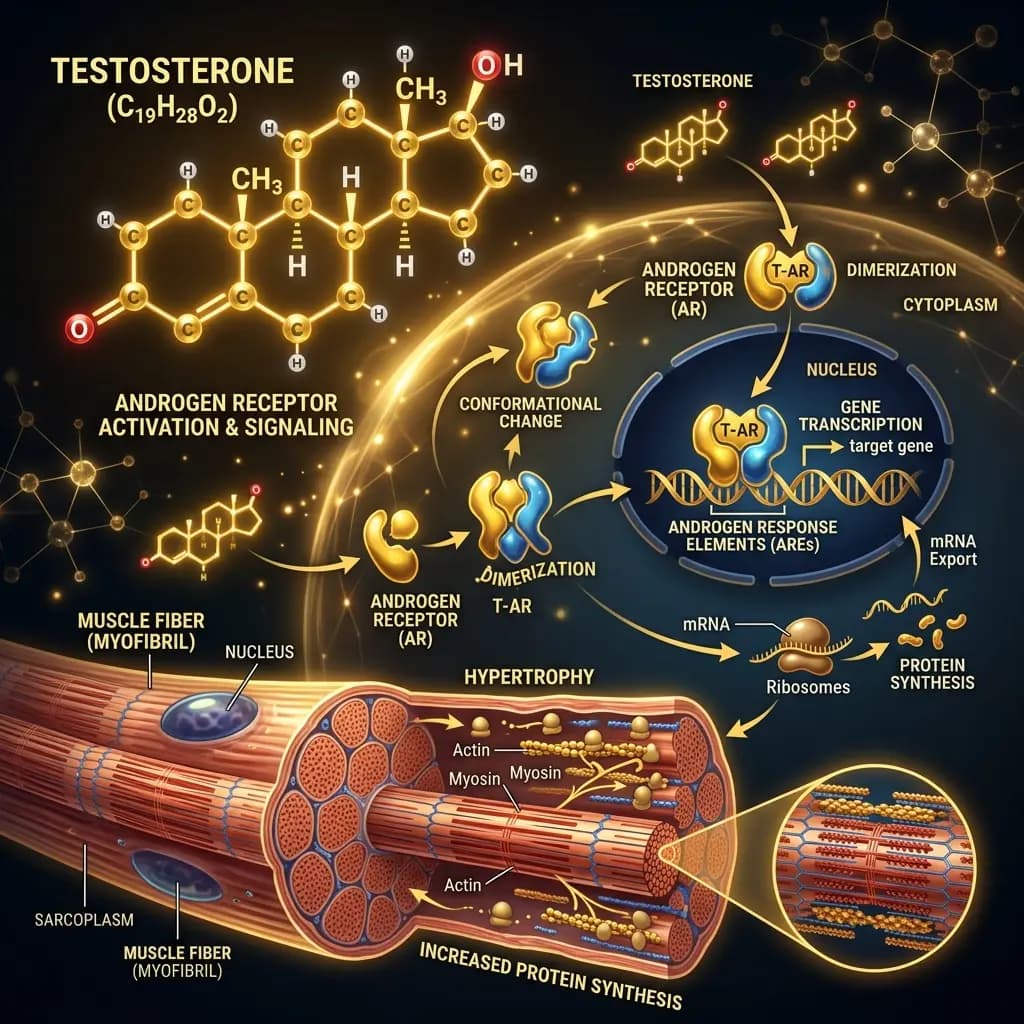
- The 2019 American Journal of Men's Health RCT: same dose produced a 14.7% testosterone increase — a direct consequence of reduced cortisol-steal on pregnenolone allocation.
- A 2020 Medicine journal RCT (n=150): 120mg KSM-66® extract improved sleep quality scores by 72% over 6 weeks — consistent with cortisol normalization enabling proper cortisol decline at night.
Best for: Chronic work stress, poor sleep quality, anxiety, low testosterone linked to stress, adrenal fatigue pattern, weight gain despite normal diet.
Rhodiola: The CNS Stress Resilience Activator
Rhodiola rosea works through an entirely different mechanism. Its active compounds — rosavins and salidroside — inhibit monoamine oxidase (MAO-A and MAO-B), the enzymes that break down serotonin, dopamine, and norepinephrine in the brain. During periods of acute cognitive or physical stress, neurotransmitter depletion is what causes the characteristic "hitting a wall" fatigue. Rhodiola doesn't reduce cortisol production — it preserves neurotransmitter availability so the brain maintains function under stress.
The clinical evidence at 3% rosavins standardization:
- A 2000 RCT in Phytomedicine: single 200mg dose of standardized Rhodiola significantly improved mental performance capacity during exam stress in physicians working overnight shifts — effects measurable within 2 hours.
- A 2009 RCT in International Journal of Sport Nutrition: Rhodiola supplementation increased time to exhaustion by 24 seconds and reduced perceived exertion in endurance athletes — consistent with neurotransmitter preservation during physical stress.
- A 2015 systematic review of 11 RCTs confirmed significant benefits for mental fatigue and cognitive performance under acute stress conditions.
Best for: Students in exam periods, professionals with high cognitive demands, athletes seeking mental performance, acute burnout, people needing same-day results.
Side-by-Side: When to Use Which
| Situation | Best Choice | Why |
|---|---|---|
| Chronic anxiety, can't "switch off" | ✅ Ashwagandha | HPA axis recalibration over 4–8 weeks |
| Mental fatigue before exam/presentation | ✅ Rhodiola | Fast-acting MAO inhibition (2–4 hours) |
| Poor sleep quality, wired but tired | ✅ Ashwagandha | Cortisol normalisation restores sleep architecture |
| Athletic burnout, overtraining syndrome | ✅ Rhodiola | Neurotransmitter preservation, HRV improvement |
| Low testosterone linked to stress | ✅ Ashwagandha | Reduces cortisol steal on pregnenolone |
| Brain fog in demanding job | ✅ Rhodiola (AM) + Ashwagandha (PM) | Stack both axes for complete coverage |
| Weight gain around abdomen despite diet | ✅ Ashwagandha | Cortisol drives visceral fat accumulation |
| Depression-adjacent exhaustion | ✅ Rhodiola | Serotonin/dopamine preservation is primary mechanism |
Can You Take Both? The Stack Science
Yes — and for many adults with both chronic HPA dysregulation AND daily cognitive demands, the combination is the optimal protocol. They target completely different biochemical nodes with zero mechanistic overlap or interaction risk. The optimal protocol:
- Morning: Rhodiola (3% rosavins standardized) — activates neurotransmitter resilience for the day ahead
- Evening: Ashwagandha (KSM-66®) — initiates HPA recalibration and cortisol decline that supports deep sleep
This timing aligns with each adaptogen's mechanism: Rhodiola's fast-acting neurotransmitter preservation is most valuable during active cognitive periods; Ashwagandha's slow cortisol recalibration benefits from overnight sustained action during sleep restoration.
SpartaMax contains KSM-66® Ashwagandha + Rhodiola — the only product we've reviewed with both at clinical doses
Check SpartaMax — Both Adaptogens in One Formula →
See Official Pricing →60-day money-back guarantee · KSM-66® at 600mg + Rhodiola at 3% rosavins
Why the Extract Form Changes Everything
This is the most overlooked variable in the ashwagandha vs rhodiola debate. Both herbs have standardized and non-standardized forms that produce radically different results:
| Form | Active Compounds | Evidence Quality | Recommendation |
|---|---|---|---|
| KSM-66® Ashwagandha | 5% withanolides (verified) | ★★★★★ Multiple RCTs | ✅ Only form with testosterone data |
| Generic Ashwagandha | 1-3% withanolides (variable) | ★★★☆☆ Inconsistent | ⚠️ Unpredictable potency |
| Rhodiola (3% rosavins, 1% salidroside) | Full spectrum standardized | ★★★★★ 11-trial meta-analysis | ✅ Required for CNS effects |
| Generic Rhodiola (rosavins only) | Missing salidroside fraction | ★★★☆☆ | ⚠️ Missing key MAO-inhibiting fraction |
Our Recommendation
If you can only choose one: identify whether your primary issue is chronic elevated cortisol (anxiety, poor sleep, belly fat → Ashwagandha) or acute cognitive/physical fatigue (brain fog, performance decline → Rhodiola). For the majority of working adults in their 30s–50s dealing with both dimensions simultaneously — the combined stack in SpartaMax is the most efficient and clinically sound single-product solution available.
FAQ
How quickly does Rhodiola work compared to Ashwagandha?
Rhodiola produces measurable cognitive effects within 30–120 minutes of a single dose — it's the fast-acting option. Ashwagandha requires 4–8 weeks of consistent daily use to produce meaningful cortisol reduction through HPA axis recalibration. Different timelines, different mechanisms.
Can ashwagandha cause drowsiness?
Some users report mild sedation, particularly at higher doses — this is consistent with cortisol reduction improving sleep onset. Taking ashwagandha in the evening (rather than morning) leverages this as an advantage rather than a side effect. Rhodiola, by contrast, is mildly stimulating and should not be taken in the evening.
Is ashwagandha safe for women?
Yes — the cortisol-lowering, stress-reduction, and sleep-improvement benefits of ashwagandha apply equally to women. Testosterone-boosting marketing is irrelevant to female users but the core stress biology is identical. Avoid during pregnancy — ashwagandha has uterine-stimulating properties in high doses.