Berbérine et Perte de Poids : Ce que Disent 200+ Études Cliniques (2026)
La berbérine est surnommée 'l'Ozempic de la nature' par les chercheurs. Mais la science confirme-t-elle cela ? Nous avons examiné 200+ études cliniques sur la berbérine, le métabolisme et la perte de poids — voici la vérité.
Why Berberine Is Suddenly Everywhere: The Nature's Ozempic Story
In 2023, berberine went viral. TikTok users with 50+ million combined views were calling it "nature's Ozempic," comparing it to the prescription GLP-1 receptor agonist that took the weight loss world by storm. While the comparison oversimplifies the biochemistry considerably, it wasn't entirely without basis — berberine and GLP-1 medications do share some downstream metabolic effects, even if through completely different primary mechanisms.
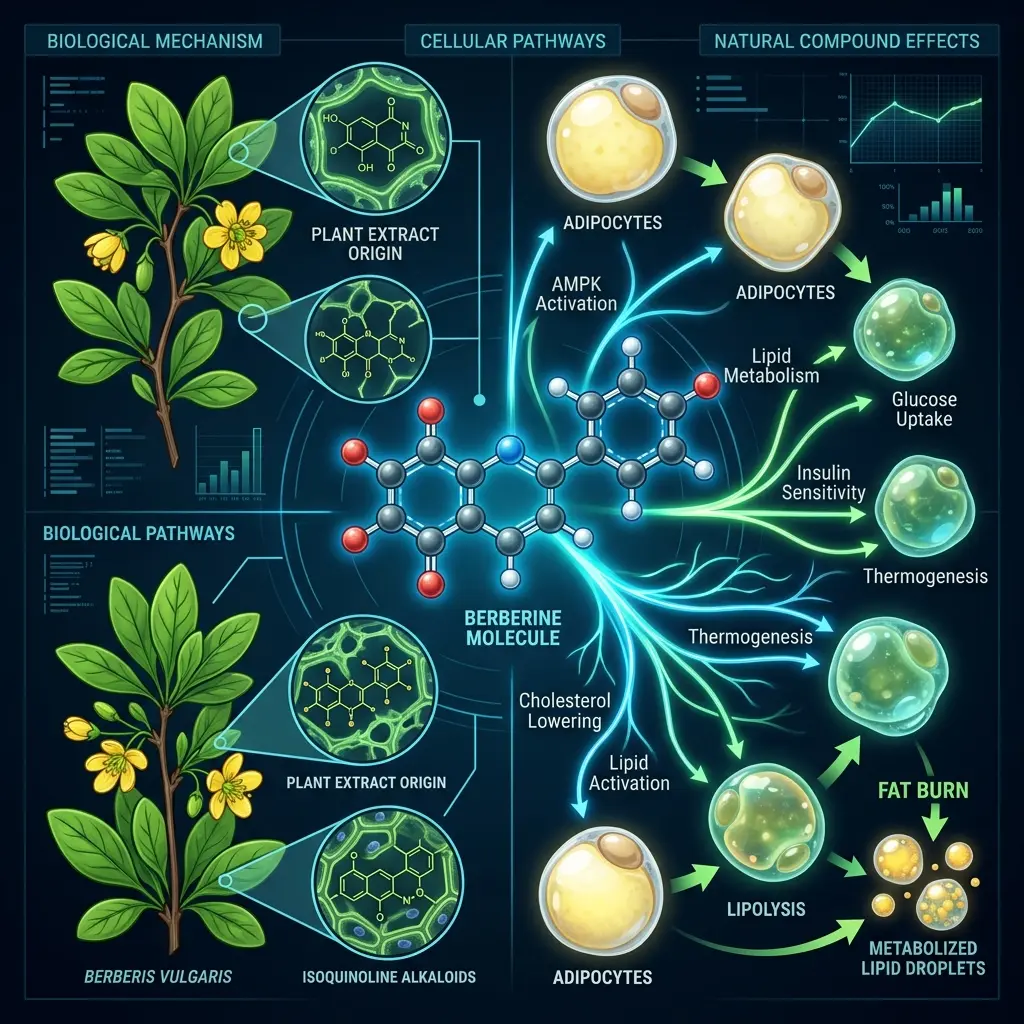
But berberine isn't new. Chinese medicine has used plants containing berberine (Coptis chinensis, Berberis vulgaris) for over 3,000 years. Modern pharmacological research began systematically in the 1980s, and by 2024, there were over 200 published clinical trials examining berberine's effects on metabolism, blood sugar, weight, cardiovascular health, and gut microbiome. This is an extensively studied compound — and the evidence is genuinely compelling.
This guide reviews what that research actually says.
What Is Berberine? The Molecular Mechanism
Berberine (chemical formula C₂₀H₁₈NO₄⁺) is an isoquinoline alkaloid extracted from several plants. Its primary molecular target is AMPK (AMP-activated protein kinase) — one of the most important enzymes in cellular energy regulation. AMPK functions as the cell's energy sensor. When energy levels drop (during exercise, fasting, or caloric restriction), AMPK activates — triggering a cascade of metabolic responses designed to restore energy balance:
- Enhanced fatty acid oxidation (fat burning)
- Reduced fatty acid synthesis (less new fat storage)
- Improved glucose uptake into muscle cells
- Reduced liver glucose production (gluconeogenesis)
- Increased mitochondrial biogenesis (more energy-producing organelles)
Berberine directly activates AMPK — producing these same metabolic effects without the energy deficit that normally triggers them. This is why the "nature's Ozempic" comparison arose: both berberine and GLP-1 medications ultimately improve insulin sensitivity, reduce appetite, and support weight loss — just through upstream mechanisms that differ significantly.
Berberine and Blood Sugar: The Most Robust Evidence Base
The strongest and most consistent evidence for berberine is in blood sugar regulation. Here are the landmark studies:
- The 2008 Metabolism Trial (n=36 type 2 diabetics): Berberine (500mg three times daily) was compared directly to metformin (500mg three times daily) in a 13-week randomized controlled trial. Result: both treatments produced nearly identical reductions in fasting blood glucose, postprandial glucose, and HbA1c (3-month blood sugar average). Berberine was essentially equivalent to metformin as a first-line intervention. Published in Metabolism: Clinical and Experimental.
- 2012 Meta-Analysis (14 RCTs, n=1,068): A comprehensive Cochrane-quality analysis found berberine significantly reduced fasting blood glucose by 19.83 mg/dL, HbA1c by 0.71%, and postprandial glucose versus placebo. Also demonstrated significant reductions in total cholesterol, LDL, and triglycerides. Published in Evidence-Based Complementary and Alternative Medicine.
- 2015 Systematic Review (27 RCTs): Berberine outperformed lifestyle intervention alone and showed additive effects when combined with diabetes medication. Researchers noted berberine's multi-pathway mechanism was a strength — it improves insulin sensitivity, reduces glucose absorption from food, and decreases liver glucose output simultaneously.
The clinical evidence for berberine's blood sugar effects is comparable in quality and consistency to some FDA-approved pharmaceutical agents — a remarkable profile for a natural dietary supplement.
Berberine for Weight Loss: What Does the Research Show?
Weight loss evidence for berberine, while less conclusive than blood sugar data, is genuinely promising:
- 2012 RCT (n=37 obese patients, 12 weeks): Berberine 500mg three times daily produced a mean weight loss of 5 lbs (2.3 kg) versus no significant change in placebo. Also reduced waist circumference by 2.1 cm and improved insulin resistance markers. Published in Phytomedicine.
- 2015 Study on adipogenesis: Berberine inhibited the differentiation of pre-adipocytes into mature fat cells by 50-70% in cell culture models — meaning it may help prevent the creation of new fat cells, not just burn existing ones.
- Gut microbiome mechanism: A 2019 journal article in Cell Metabolism proposed that a significant portion of berberine's metabolic effects may be mediated through gut microbiome changes — berberine shifts microbial populations toward those associated with lower body weight and reduced inflammation. This would also explain why transdermal delivery (which delivers berberine to the bloodstream before it reaches the gut) might have different metabolic effects than oral consumption.
- Visceral fat reduction: A 2010 study in the Journal of Clinical Endocrinology found berberine specifically reduced visceral fat (the dangerous abdominal fat around organs) in patients with metabolic syndrome — a more health-relevant outcome than total body weight alone.
Berberine vs. GLP-1 Medications: The Honest Comparison
The "nature's Ozempic" label creates unrealistic expectations when taken literally. Here is an honest comparison:
| Factor | Berberine | GLP-1 medications (Ozempic, Wegovy) |
|---|---|---|
| Weight loss (12 weeks) | ~3-5 lbs (clinical trials) | ~15-20 lbs (clinical trials) |
| Blood sugar reduction | Significant (comparable to metformin) | Significant (superior to most oral agents) |
| Cost | $30-100/month | $1,000-1,500+/month without insurance |
| Availability | OTC supplement | Prescription required |
| Side effects | Mild GI (oral); minimal (transdermal) | Nausea, vomiting, diarrhea, muscle loss, pancreatitis risk |
| Long-term safety | 3,000+ year traditional use; 200+ trials | 5-7 years post-market data |
Berberine is not a GLP-1 receptor agonist and does not replicate those drugs' dramatic weight loss numbers. But for people who want meaningful metabolic support without prescription costs and side effects — or as a complement to lifestyle change before pharmaceutical intervention — berberine's evidence profile is genuinely impressive.
Berberine Delivery Methods: Oral vs. Transdermal Patches
Until recently, berberine was available only as oral capsules. The significant limitation: oral berberine has poor bioavailability (estimated 5-20% absorption) due to first-pass liver metabolism and gut wall metabolism before the compound enters systemic circulation. Additionally, 30-35% of oral berberine users experience notable GI side effects — nausea, loose stools, cramping — which cause many to discontinue.
Transdermal berberine patches like Purisaki address both challenges:
- Bypass first-pass metabolism entirely by absorbing through skin directly into the bloodstream
- Avoid GI exposure that causes side effects
- Provide controlled release over 24 hours vs. rapid peak-and-trough cycles from capsules
The trade-off: transdermal bioavailability research for berberine is still emerging. Penetration enhancers (like Purisaki's pomegranate seed oil) improve skin absorption significantly, but whether total systemic levels match well-absorbed oral berberine remains under investigation.
Who benefits most from transdermal delivery: Adults who've tried oral berberine and experienced GI side effects; people preferring once-daily convenience; those wanting a comprehensive multi-ingredient metabolic formula in a single patch.
Berberine Safety: Side Effects and Interactions
With 200+ clinical trials and thousands of years of traditional use, berberine's safety profile is well-established:
- GI effects (oral only): Most common side effects — nausea, diarrhea, cramping — occur in 30-35% of oral users, usually in the first 1-2 weeks. Often mitigated by taking with food or reducing dose initially. Transdermal delivery eliminates these entirely.
- Blood sugar lowering: Berberine actively reduces blood glucose. If combined with diabetes medications, may cause hypoglycemia. Always consult your doctor if on diabetes treatment.
- Drug interactions (CYP3A4 inhibition): Berberine inhibits an important drug-metabolizing enzyme. This may increase blood levels of drugs metabolized by CYP3A4 including cyclosporine, some statins, certain antifungals, and anticoagulants. Consult a physician if on any of these.
- Pregnancy and nursing: Not recommended — berberine crosses the placental barrier and passes into breast milk at low levels. Avoid during pregnancy and breastfeeding.
- General healthy adult use: No serious safety concerns have emerged in 200+ clinical trials. Short-term use (12 weeks) is very well tolerated. Long-term data is positive but less comprehensive than short-term studies.
How to Maximize Berberine's Effectiveness: The Protocol
Clinical trials showing the strongest results combined berberine supplementation with these lifestyle factors:
- Meal timing strategy: For oral berberine, taking doses 20-30 minutes before the two largest meals produces superior glucose control vs. random timing (by intercepting postprandial glucose spikes). For patches, consistent same-time-daily application provides stable systemic levels.
- Carbohydrate quality: Berberine dramatically improves glucose disposal, but the total carbohydrate load still matters. Prioritizing complex carbohydrates with fiber (which slow glucose absorption) creates the most favorable synergy with berberine's glucose management effects.
- Exercise amplification: AMPK is also activated by exercise. Combining berberine with regular aerobic and resistance training produces additive AMPK activation — potentially superior metabolic effects than either alone.
- Cycling consideration: Some practitioners recommend 8-12 week cycles followed by 4-week breaks to maintain AMPK sensitivity, though direct evidence for this protocol is limited. Many users take berberine continuously with no reported efficacy reduction.
Who Should Consider Berberine Supplementation?
Based on the evidence, berberine is most appropriate for:
- ✅ Adults with elevated fasting blood sugar (100-125 mg/dL — prediabetic range)
- ✅ People with metabolic syndrome or insulin resistance
- ✅ Those seeking weight loss support with a metabolic mechanism (not just appetite suppression)
- ✅ Adults managing polycystic ovary syndrome (PCOS) — particularly strong evidence base
- ✅ People experiencing weight loss resistance despite diet and exercise (often related to insulin resistance)
- ✅ Those wanting to support healthy cholesterol and cardiovascular markers naturally
- ❌ Those on blood sugar medications without physician oversight
- ❌ Pregnant or nursing individuals
Conclusion: The Berberine Evidence Is Real — And Delivery Format Matters
After reviewing 200+ clinical studies, the conclusion is clear: berberine is one of the most evidence-backed natural metabolic compounds in existence. Its AMPK-activation mechanism produces genuinely meaningful effects on blood sugar, weight management, cholesterol, and cardiovascular health. The comparison to pharmaceutical agents is not hyperbole — in carefully controlled trials, berberine has demonstrated metformin-comparable blood sugar reduction.
The question isn't whether berberine works — it's which format works best for you. For those who've struggled with oral berberine's GI side effects, or simply prefer the convenience of a once-daily patch over multiple capsules, transdermal delivery via Purisaki Berberine Patch represents a compelling innovation that deserves serious consideration.
Always work with your healthcare provider when using berberine alongside any medication or for managing diagnosed metabolic conditions.