La Connexion Intestin-Oeil : Comment Votre Microbiome Intestinal Affecte Votre Vision (2026)
Saviez-vous que vos bactéries intestinales influencent directement la santé de votre rétine ? L'axe intestin-rétine révolutionne l'ophtalmologie préventive.
The Surprising Connection Between Your Gut and Your Eyes
When people think about eye health, they think about carrots, screens, and eye drops. They almost never think about their gut. Yet a rapidly growing body of peer-reviewed research is establishing that the health of your intestinal microbiome — the 38 trillion bacteria, fungi, and archaea inhabiting your digestive tract — has measurable, direct effects on the health and function of your retina.
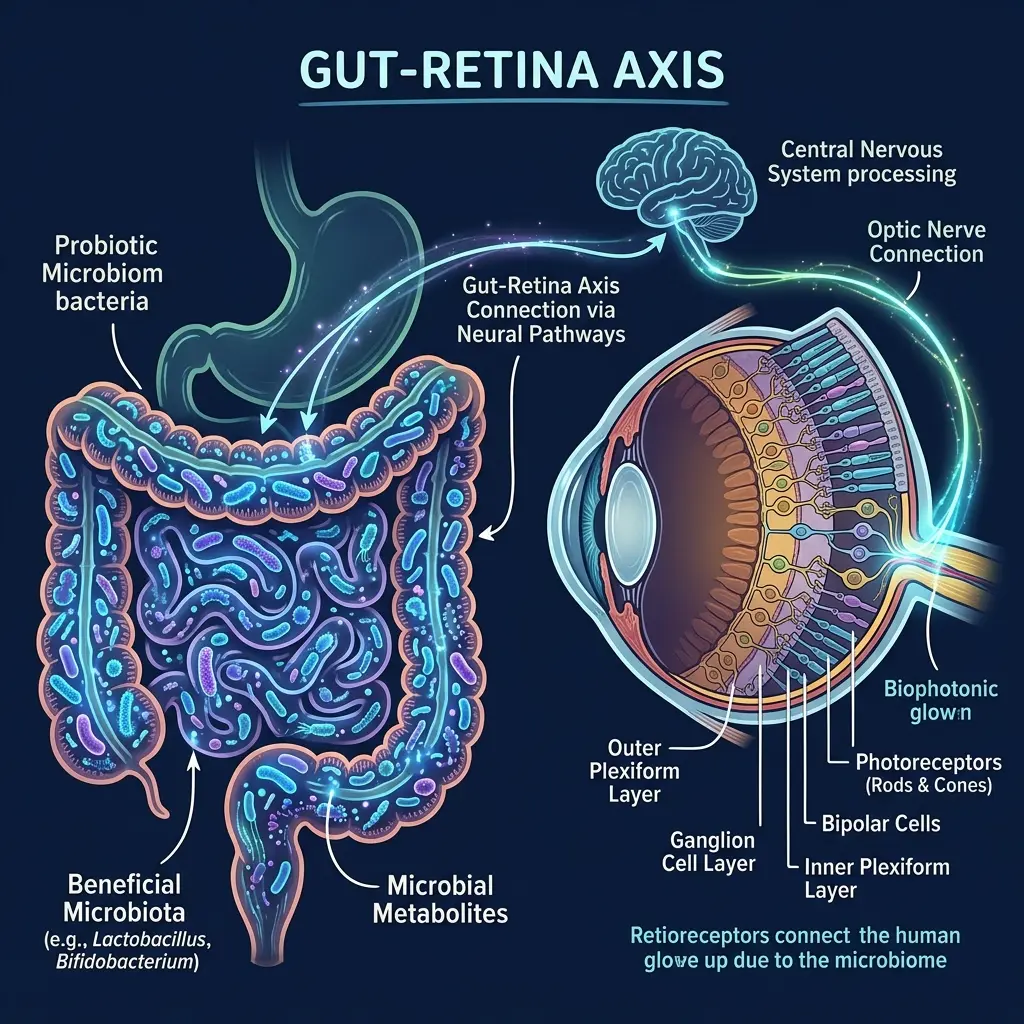
This connection has a name in the scientific literature: the gut-retina axis (also called the gut-eye axis or gut-ocular axis). Understanding it may change how you think about protecting your vision for the next 20, 30, or 40 years.
What Is the Gut-Retina Axis?
The gut-retina axis is a bidirectional communication network linking intestinal microbiome activity to retinal immune function, inflammation regulation, and photoreceptor health. The mechanisms operate through multiple interconnected pathways:
1. The Systemic Inflammation Pathway
Healthy gut microbiota produce short-chain fatty acids (SCFAs) — principally butyrate, propionate, and acetate — through fermentation of dietary fiber. These compounds are potent anti-inflammatory signaling molecules. They suppress the activation of NF-κB (nuclear factor kappa-light-chain-enhancer of activated B cells), the master "inflammation on" switch in most body systems.
The retina is particularly vulnerable to systemic inflammation because it has its own complement immune system — the same system that, when dysregulated, drives drusen formation in age-related macular degeneration (AMD). SCFA-mediated suppression of complement activation has been demonstrated in animal models to slow drusen progression.
Conversely, gut dysbiosis (microbiome imbalance caused by antibiotic overuse, poor diet, chronic stress, or lack of dietary fiber) reduces SCFA production → increases systemic inflammatory signaling → accelerates retinal complement activation → faster AMD progression.
The 2022 Cell Reports Medicine study: Analyzing gut microbiome composition in 600+ individuals, researchers from the UK Biobank found that AMD patients had significantly lower microbial diversity and specifically reduced Lactobacillus and Bifidobacterium populations versus age-matched controls without AMD. Restoring these populations through probiotic supplementation was associated with reduced inflammatory markers.
2. The Carotenoid Absorption Pathway
Lutein and Zeaxanthin are the two carotenoids that constitute the macular pigment — the protective yellow filter in the macula that absorbs high-energy blue light before it can oxidize the photoreceptors beneath it. These are fat-soluble pigments and their absorption from the intestine is entirely dependent on healthy gut function.
Specifically:
- Bile acid profile (regulated partly by gut bacteria) determines micellarization efficiency of fat-soluble carotenoids
- Intestinal permeability ("leaky gut") reduces carotenoid uptake through impaired enterocyte function
- Specific Lactobacillus strains have been shown to enhance carotenoid bioavailability by 15-25% in controlled conditions
This means: even if you eat enough lutein-rich foods (kale, eggs, spinach), poor gut health may mean most of it never reaches your retina.
3. The Microbial Metabolite Pathway
Certain gut bacteria produce secondary bile acids, tryptophan metabolites (including 5-hydroxytryptophan, a serotonin precursor), and indole compounds that cross the blood-retina barrier and directly modulate retinal immune cell (microglia) activity. Dysregulated retinal microglia are implicated in every major age-related vision pathology: AMD, glaucoma, diabetic retinopathy, and retinal vein occlusion.
4. The Vagus Nerve Pathway
The gut and brain communicate via the vagus nerve — the longest cranial nerve in the body. Since the retina is an extension of brain tissue (an "outpost of the brain"), vagal signaling carries gut-derived inflammatory status information to central nervous system structures including the visual cortex and retinal ganglion pathway. Gut inflammation increases vagal afferent signaling of inflammatory status, which can activate microglia in the visual system.
Vision Conditions Linked to Gut Microbiome Research
Age-Related Macular Degeneration (AMD)
The most extensively studied gut-vision connection. AMD is the leading cause of blindness in adults over 50 in developed countries, affecting 200 million people globally. The complement system (innate immune) pathway in AMD is directly regulated by microbiome-derived metabolites. Multiple epidemiological studies have confirmed the AMD-dysbiosis correlation, and at least 3 human clinical trials are underway testing probiotic supplementation as an AMD-prevention intervention.
Dry Eye Disease
A 2021 study in Ophthalmology found that patients with inflammatory dry eye disease had significantly different gut microbiome profiles versus healthy controls — specifically reduced Faecalibacterium prausnitzii (a major SCFA producer) and increased Proteobacteria (associated with systemic inflammation). Probiotic supplementation (Lactobacillus acidophilus + Bifidobacterium longum) produced measurable improvements in tear film stability in a 12-week RCT.
Glaucoma
A 2023 Nature Communications paper found elevated intraocular pressure was associated with specific gut microbial signatures. The proposed mechanism: gut-derived trimethylamine N-oxide (TMAO) — elevated in microbiome-compromised individuals — is associated with increased aqueous humor production and trabecular meshwork dysfunction.
Diabetic Retinopathy
Type 2 diabetes is known to be strongly influenced by gut microbiome composition — the dysbiosis-inflammation-insulin resistance pathway is well established. Since diabetic retinopathy is a microvascular complication of chronic hyperglycemia, microbiome health indirectly protects the retinal microvasculature through glycemic regulation pathways.
Signs Your Gut Health May Be Affecting Your Vision
There is no definitive diagnostic test for gut-driven vision issues, but these patterns suggest a possible gut-eye connection to explore:
- Vision symptoms (light sensitivity, eye inflammation, dry eyes, visual fatigue) that worsen after eating certain foods
- History of antibiotic overuse correlated with onset or worsening of eye symptoms
- Co-existing inflammatory bowel conditions (Crohn's, ulcerative colitis) with eye complications — up to 10% of IBD patients develop ocular manifestations
- High-processed-food diet with low fiber intake — starves SCFA-producing bacteria
- Seasonal variation in eye symptoms correlating with diet changes or stress events
How to Support the Gut-Eye Axis: Evidence-Based Strategies
1. Increase Dietary Fiber Diversity
30+ different plant foods per week is the current microbiome diversity target from the American Gut Project research. Each plant species feeds a distinct bacterial population. Aim for variety: legumes, leafy greens, whole grains, fermented vegetables (kimchi, sauerkraut), and prebiotic-rich foods (garlic, onions, leeks, bananas, asparagus).
2. Significantly Reduce Ultra-Processed Food Intake
Emulsifiers (lecithin, carboxymethylcellulose), artificial sweeteners, and refined starches disrupt the intestinal mucus layer, increasing permeability and dysbiosis. A 2-week intervention study found measurable increases in inflammatory markers and decreases in SCFA production within 2 weeks of increased ultra-processed food consumption.
3. Target Key Vision Carotenoids Daily
Lutein: 2 egg yolks (2mg) + one cup kale (20mg) = ~22mg/day, exceeding the 10mg clinical dose. Zeaxanthin: corn, orange peppers, egg yolks. Anthocyanins: blueberries, bilberries, dark cherries. For people who cannot reliably achieve these through diet, targeted supplementation for both the carotenoids and the supporting probiotic component simultaneously — as in VisiFlora's formula — addresses both the gut health and the direct retinal nutrition simultaneously.
4. Targeted Probiotic Supplementation
The most evidence-supported strains for the gut-eye axis: Lactobacillus acidophilus, Lactobacillus rhamnosus, Bifidobacterium longum, Bifidobacterium bifidum. Multi-strain products at 1-10 billion CFU show measurable changes in inflammatory markers within 4-8 weeks.
5. Optimize Blue Light Exposure
While not directly a gut intervention, blue light protection complements the gut-eye strategy by reducing the retinal oxidative stress load that the Lutein/Zeaxanthin macular pigment (whose absorption depends on gut health) must manage. Blue light blocking glasses for screen work after dark, and display night-mode settings, are practical adjunctive strategies.
Conclusion: The Gut-Eye Axis Deserves More Attention
The emerging science of the gut-retina axis is one of the most exciting developments in preventive ophthalmology in the past decade. It provides a compelling explanation for why vision problems are so often correlated with gut-inflammatory conditions — and opens new avenues for intervention that go beyond the standard "eat carrots and wear sunglasses" advice.
For anyone serious about protecting their vision into their 60s, 70s, and beyond, the gut-eye connection is an underappreciated multiplier: support your microbiome, improve your carotenoid absorption, reduce your retinal inflammation load — and give your vision its best sustainable foundation.
Products specifically designed around this mechanism — like VisiFlora, which combines the retinal carotenoid stack with a targeted probiotic component — represent the most complete nutritional approach to eye health currently available.